Showing posts with label history. Show all posts

Monday, October 10, 2011

Worlds colliding

According to Charles C. Mann, the 1492 journey of Christopher Columbus to the New World and the movement of plants, animals, diseases and ideas that followed -- know as the Columbian Exchange -- is "the greatest event in the history of life since the death of the dinosaurs." Everything changed for people of both sides of the Atlantic Ocean -- mostly for the worse for the millions who had been inhabiting what was eventually called the Americas.

Mann has written a book called 1493 -- referring to how the world changed after Columbus first made landfall -- and though I haven't read it I did hear him on NPR a few weeks ago and the interview was pretty interesting. (Link to interview here.) Mann notes that:
"There's absolutely nothing in my garden that originated within 1,000 miles of my house," he says. "Tomatoes originated in Mexico. Basil came from Italy. Onions came from Europe. I live in Massachusetts. There's absolutely nothing in there from New England."
The exchange of foods has been wonderful, but we cannot forget that somewhere "between two-thirds and 90 percent of the people in the Americas" were wiped out, mostly from diseases unknowingly introduced by the conquering Europeans.

On this holiday we remember the meeting, 519 years ago, of two different worlds, and all of the ramifications, good and bad, of that encounter.

Sunday, September 11, 2011

Where I was on 9/11

Oddly enough, I was in Carlisle, a town about 25 miles northwest of Boston, during the 9/11 terror attacks. I had taken a new job that year and was getting ready for my last day of training at a beautiful facility off a rural road. When I pulled into the parking lot a young guy who was also being trained asked if I'd heard that a plane had flown into one of the Twin Towers. I hadn't. My radio must have been off during the drive, probably because it was such a beautiful day and I'd rolled the windows down to feel the fresh country air and didn't want any unnatural sounds to disturb the moment.

We went inside and were joined by the others, maybe seven trainees and our instructor. Moments later someone from the facility stuck their head in and told us about the second plane. Of course, everyone knew what that meant. I think we went back into the lobby to watch the news coverage for a bit, then went back to start our training. We stopped a couple times to decide whether or not to continue on -- especially after the towers fell -- but decided that we'd rush through and get out as soon as possible. A television was wheeled in for a bit and we kept tabs on what was happening, and we did break so that everybody could call their loved ones, and I knew I'd better call my mother or she'd be worried sick. 

The training over, we went our separate ways, and I never saw any of those people again. We'd be working for the same organization, but at different facilities, and I've always felt it strange that I spent the most awful moments of my country's recent history in a place I didn't know very well with people I didn't know very well.

And stranger still, I drove back not to East Boston, but to Somerville, where I had moved just 11 days earlier. I had two roommates and one of them was sitting on the front stairs, crying, when I got home. I barely knew her, but Paula's fiance was scheduled to fly to Los Angeles from Logan Airport on business that morning. She had, just before I arrived, found out that he was not on either of the LA-bound planes that had been hijacked, but on a different flight and was, therefore, fine. I consoled her as best I could, and then went inside to put on the TV and my computer, so I could finally get connected to the information stream -- something I like to do during important events.

The next morning I went out early to get copies of The Globe, The Herald and The New York Times. I'd always saved historically significant newspapers and I needed to add editions from Sept. 12 to my collection.

Saturday, August 6, 2011

Asleep at the wheel

It was 10 years ago today that President George W. Bush was handed a morning security briefing titled "Bin Laden Determined to Strike in US." Bill Clinton's transition team later reported that the Bush Administration never seemed too concerned about terrorism, and 36 days after that aptly titled briefing, four planes were hijacked and, well, we all know the rest.

Bush managed to deflect most of the criticism on this issue, but can you imagine if Al Gore was in the White House when 9/11 happened? I am positive that he would have been impeached by Republicans in Congress.

Monday, July 4, 2011

In Congress, July 4, 1776


“We hold these truths to be self-evident, that all men are created equal, that they are endowed by their Creator with certain unalienable Rights, that among these are Life, Liberty and the pursuit of Happiness. That to secure these rights, Governments are instituted among Men, deriving their just powers from the consent of the governed…”

Monday, May 30, 2011

Glory and remembrance

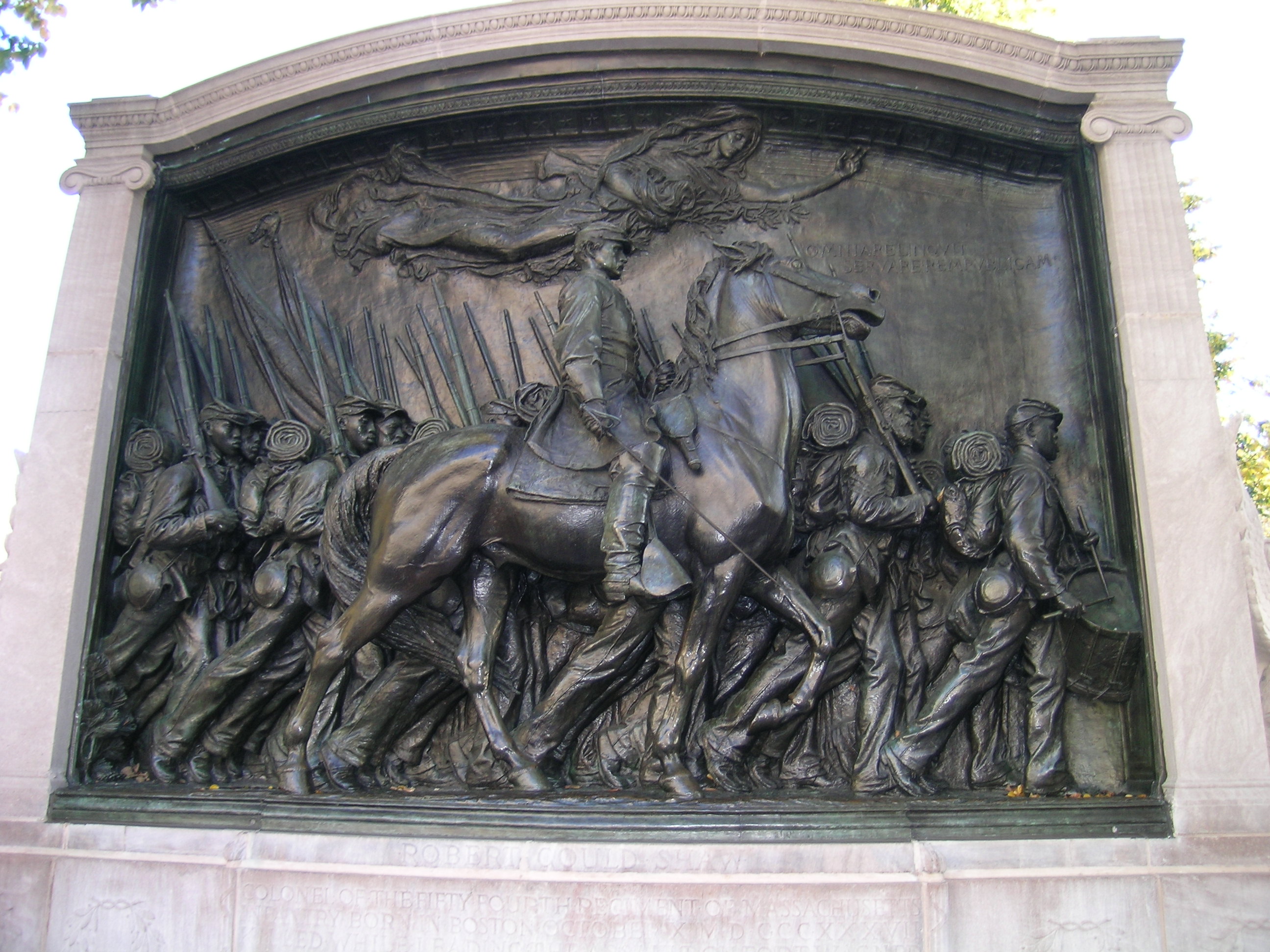
On Memorial Day in 1897, a work of art was unveiled to the public at the edge of the Boston Common, across from the State House. It was a bronze bas-relief by the American master Augustus Saint-Gaudens commemorating the 54th Massachusetts Volunteer Infantry Regiment and its leader, Colonel Robert Gould Shaw. The 54th was one of the first units composed of black soldiers to fight in the Civil War, and Shaw was from a Boston abolitionist family.

Considered by many to be the finest piece of public art in Boston, as well as one of Saint-Gaudens' masterpieces, the work depicts the 54th on May 28, 1863, marching down Beacon Street and off to war, with Shaw on horseback and an angel floating above. Shaw and 29 of his men died in South Carolina less than two months later, but throughout the war, the 54th fought with distinction. The regiment was portrayed in the Oscar-winning 1989 film Glory.

Friday, March 25, 2011

The sacrifice of workers

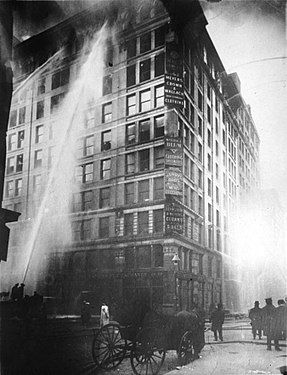
As conservatives attempt to vilify working people across America, it's important to remember what happened 100 years ago today. On that day, at around 4:45 p.m., fire broke out at the Triangle Shirtwaist Factory in Lower Manhattan. Workers, mostly young Jewish and Italian immigrant women, were trapped because the doors were locked.

Burns and smoke inhalation killed those who couldn't escape; blunt force killed others who jumped from the ninth floor. The death toll was 146.

The event spurred the enactment of workplace laws and the inspection of other death traps. The owners of the building were found not guilty of second-degree manslaughter, though one of them was fined $20 for locking the doors.

This would be a good time to consider Bertolt Brecht's poem "A Worker Reads History":

Who built the seven gates of Thebes?
 The books are filled with names of kings.
 Was it the kings who hauled the craggy blocks of stone?
 And Babylon, so many times destroyed.
 Who built the city up each time? In which of Lima's houses,
 That city glittering with gold, lived those who built it?
 In the evening when the Chinese wall was finished
 Where did the masons go? Imperial Rome
 Is full of arcs of triumph. Who reared them up? Over whom
 Did the Caesars triumph? Byzantium lives in song.
 Were all her dwellings palaces? And even in Atlantis of the legend
 The night the seas rushed in,
 The drowning men still bellowed for their slaves.

 Young Alexander conquered India.
 He alone?
 Caesar beat the Gauls.
 Was there not even a cook in his army?
 Phillip of Spain wept as his fleet
 was sunk and destroyed. Were there no other tears?
 Frederick the Greek triumphed in the Seven Years War.
 Who triumphed with him?

 Each page a victory
 At whose expense the victory ball?
 Every ten years a great man,
 Who paid the piper?

 So many particulars.
 So many questions.

Monday, February 28, 2011

Celebrating the neighborhood's history

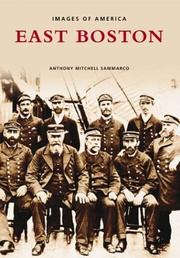
Local historian Anthony Sammarco will speak Wednesday evening on the history of East Boston in the lecture hall at East Boston High School. The talk is part of a series called "East Boston: Yesterday, Today and Tomorrow," which is sponsored by the Eagle Hill Civic Association. The program is free to all and begins at 7 p.m.

There is a story on the event at Boston.com.

Image of Anthony Sammarco's book on East Boston courtesy of openlibrary.org.

Wednesday, February 16, 2011

Eastie in the news

***An article on The Daily Beast web site talks about the role of East Boston resident Gene Sharp in the recent overthrow of Egypt's prime minister, as well as other non-violent revolutions. Sharp runs the Albert Einstein Institute out of his house in the neighborhood, and his books and pamphlets are read and passed around throughout the world. Update: BBC online also profiles Gene Sharp.


***The Boston Preservation Alliance released a report on places in East Boston that are historically notable and should be preserved, including the First Presbyterian Church on London Street and the Temple Ohabei Shalom Chapel on Wordsworth Street.

***Boston.com notes that the Boston Police of Station 7 in East Boston have been recognized for their work fighting underage tobacco use.

***Ryan Lee, the Eastie resident who found a bag of money and returned it to the rightful owner, was honored today by the Boston City Council.

Photo of  the Temple Ohabei Shalom Chapel courtesy of Wikipedia.

Sunday, February 6, 2011

Evaluating Reagan

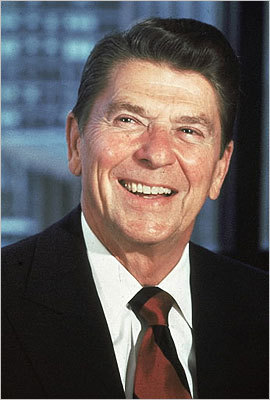
A couple years ago I saw a documentary on PBS on George H. W. Bush, who served as 41st President of the United States and was also vice-president under Ronald Reagan. Someone interviewed for the program made the point that, while Reagan played the roles of star athlete and war hero on film, the elder Bush had really lived that life. Reagan is often cited as "The Great Communicator," and justifiably so, but much of what he communicated was a sham.

Across the country the 100th anniversary of Reagan's birth is being marked today. He has become larger than life and an icon of the conservative movement. Some even want to add him to Mount Rushmore. The facts, however, belie this tale of hero worship. While he was in office I remember thinking that Reagan was the worst president the nation had ever seen. Of course, I couldn't conceive of George W. Bush then, and in comparison Reagan seems only mildly bad, but from his backing of murderous militias in Latin America to his foolish "trickle-down" ideas in economics to his refusal to fight AIDS to Iran-Contra and more, Reagan was a disaster for America. Now we read in his son's memoir that the old man had likely begun to suffer from Alzheimer's while still in office. What was the difference from how he behaved before that?

Reagan's legacy may have done the most damage of all: a revived conservative movement. The country suffered through eight years of Bush Jr. and we are still trying to clean up that mess. Reagan's best acting job was as president, and today he has more people fooled than ever.

Monday, January 3, 2011

To save or not to save

The Globe reports on the demolition of the East Boston Immigration Station, located on the harbor waterfront. The site was open from 1920 to 1959 to process and detain immigrants, but was relegated to use as storage by various entities after that. Massport now owns the structure, which was denied protection by the city's landmarks commission.

A couple weeks ago the Globe had a story on historic sites in the neighborhood that would be protected. The groups involved will release a report this month "intended to provide a roadmap for future redevelopment." One site recommended for preservation is the First Presbyterian Church (in photo, courtesy of Boston.com).

Update (7:15 p.m.): A Boston.com blog post advocates preservation of the immigration station.

Friday, November 12, 2010

Fired up

Thanks to EastBoston.com for pointing us to a story on the City of Boston web site about the Luongo Restaurant fire that occurred in November of 1942. I'd never heard of the catastrophe, which took the lives of six firefighters as they battled a blaze in Maverick Square.

Five alarms were eventually sounded, but the conflagrations was knocked off the front pages by the Cocoanut Grove fire, which killed 492 people just two weeks later.

Photo courtesy of cityofboston.gov.

Monday, October 11, 2010

The real Columbus

From "Examining the Reputation of Columbus," an essay by Jack Weatherford, a professor at Macalaster College in St. Paul, Minnesota:
After he failed to contact the emperor of China, the traders of India, or the merchants of Japan, Columbus decided to pay for his voyage in the one important commodity he had found in ample supply -- human lives. He seized 1,200 Taino Indians from the island of Hispaniola, crammed as many onto his ships as would fit, and sent them to Spain, where they were paraded naked through the streets of Seville and sold as slaves in 1495. Columbus tore children from their parents, husbands from wives. On board Columbus' slave ships, hundreds died; the sailors tossed the Indian bodies into the Atlantic.

Because Columbus captured more Indian slaves than he could transport to Spain in his small ships, he put them to work in mines and plantations which he, his family, and followers created throughout the Caribbean. His marauding band hunted Indians for sport and profit -- beating, raping, torturing, killing, and then using the Indian bodies as food for their hunting dogs. Within four years of Columbus' arrival on Hispaniola, his men had killed or exported one-third of the original Indian population of 300,000.

This was the great cultural encounter initiated by Christopher Columbus. This is the event celebrated each year on Columbus Day. The United States honors only two men with federal holidays bearing their names. In January we commemorate the birth of Martin Luther King, Jr., who struggled to lift the blinders of racial prejudice and to cut the remaining bonds of slavery in America. In October, we honor Christopher Columbus, who opened the Atlantic slave trade and launched one of the greatest waves of genocide known in history.

Friday, October 8, 2010

Columbus Day weekend

***The late John White, brigadier general and a son of East Boston, will be honored with a plaque in Maverick Square on Saturday morning at 9 a.m. Details here at EastBoston.com.

***Columbus Day breakfast at Spinelli's on Sunday morning.

***East Boston hosts this year's Columbus Day parade, which leaves from the Suffolk Downs parking lot at 1 p.m., moves along Bennington Street to Day Square, then along Chelsea Street to Maverick Square and, finally, along Meridian Street to Central Square.

Saturday, September 11, 2010

Remembering 9/11

It wasn't long into the new decade (and century?) that we witnessed its defining event. The attacks of 9/11 have dictated American domestic and foreign policy since that awful, incomprehensible day nine years ago, and it appears that we will be living in a post-9/11 world for years to come. A pair of related events have driven the news cycle in recent weeks: the Park51 Islamic community center and the proposed burning of multiple copies of the Quran by a minster in Florida.

Two links I want to share today: first is President Obama's response at yesterday's press conference to a question about the Park51 project (starting at about 1:30). I think he nails it. Second is some remarks made by John Hodgman before he was a well-known comedian. As he introduces a literary reading two weeks after the attacks, Hodgman attempts to give some meaning to the world in the wake of 9/11.

Sunday, July 4, 2010

'The consent of the governed'

On this Fourth of July, a key excerpt from the Declaration of Independence:
We hold these truths to be self-evident, that all men are created equal, that they are endowed by their Creator with certain unalienable Rights, that among these are Life, Liberty and the pursuit of Happiness. — That to secure these rights, Governments are instituted among Men, deriving their just powers from the consent of the governed, — That whenever any Form of Government becomes destructive of these ends, it is the Right of the People to alter or to abolish it, and to institute new Government, laying its foundation on such principles and organizing its powers in such form, as to them shall seem most likely to effect their Safety and Happiness.
--In Congress, July 4, 1776

Wednesday, May 19, 2010

Landmark status denied

The Boston Landmarks Commission issued a report yesterday that says East Boston's immigration station "should not be protected as a historic landmark," according to The Boston Globe. The report comes a decade after a petition was filed by Eastie residents. The full commission votes whether to accept the report on June 22, but there will be a public hearing first at City Hall on June 8.

Photo from Boston.com.

Monday, May 10, 2010

Memories

When I was a kid the Bruins were kings, and I was sitting in front of the television forty years ago today when the B's won their first Stanley Cup in nearly three decades and one of only two since 1941. That championship series ended with Bobby Orr's famous overtime goal, after which the 22-year-old defenseman was sent flying through the air.

A poster of the iconic image, captured by photographer Ray Lussier, hung on my wall for many of my teenage years. Today a statue of Orr in flight was unveiled outside the Garden.

Monday, April 12, 2010

A look at the Immigration Station

Boston.com has a story, photos and a video about the East Boston Immigration Station, which saw tens of thousands pass through between 1920 and the mid-1940s. At that point the Marginal Street facility was used to intern people of German and Japanese descent after the United States entered World War II.

Today the structure is decrepit and it's owned by Massport, which is considering tearing it down, though some in the neighborhood are hoping to save and rehabilitate this slice of Eastie's history. One web site is behind the idea. As usual, I expect no attempt by the Evil Empire to consider what local residents think when making a decision that affects our neighborhood.

Friday, February 26, 2010

Eastie notes

***Thursday night's storm did some damage and knocked out power throughout the region, and some of the most powerful winds were recorded in the neighborhood. The Globe said that "sustained wind speeds of over 50 miles per hour were recorded in East Boston" and that gusts "blew over 60 in East Boston," among other places.

***Our friends at EastBoston.com have posted a link to a fascinating bit of history: the published proceedings of a civic-group meeting that was held in East Boston to honor Abraham Lincoln within weeks of the 16th president's assassination. The local council of the Union League of America met at Sumner Hall on Elbow Street on May 8, 1865, and the program included the recitation of a dirge by J.W. Turner of East Boston and music from the East Boston Sumner Glee Club. Then the Rev. Warren H. Cudworth, the pastor of Eastie's Unitarian Church, delivered a long eulogy, which included this excerpt:
Abraham Lincoln! upholder and defender of the Union, purifier of the Constitution, friend and emancipator of the oppressed, the people's choice and champion; fearless amid dangers, steadfast in uncertainties, uncorrupted by temptation, faithful in trial as in triumph, faithful from the beginning to the end, faithful in life, faithful even unto death! the noblest patriot, the purest politician, the grandest man, the greatest benefactor, the most glorious martyr, of the age.
Pretty sweet.

***There have been several stories in recent days about tenants evicted from 22 Princeton Street by the building's new owner, Paul Rolff, a real-estate developer and business owner. We don't need well-heeled speculators flipping houses in the neighborhood and tossing poor and working folks into the street.

Friday, January 29, 2010

Bringing history to life

Students at the Umana Middle School have helped develop a video game that is set during the Battle of Chelsea Creek, a little-known but key skirmish during the American Revolution that took place just off-shore of East Boston.

A Boston Globe story today talks about the game and other elements of Eastie's history that are on display at the Cultural Exchange Center at 80 Border Street.